
Sports and Activities on Offer
Inclusive Opportunities to Get Active
Blue Light Sports Foundation is committed to making sport and physical activity more accessible, inclusive and welcoming.
We offer a diverse programme of adaptive and inclusive opportunities, from team and individual sports to recreational and leisure activities.
Our aim is simple: to help as many people as possible enjoy the benefits of being active.
Whatever your ability, experience or starting point, you are welcome.
We want to remove barriers, build confidence and create opportunities for people to participate in ways that work for them.
Being active can be about so much more than taking part in sport. It can create friendships, strengthen confidence, encourage independence, support wellbeing and provide a real sense of belonging.
Everyone deserves the opportunity to participate. Everyone has potential. Everyone is welcome.
Team Sports
Our team sports programme provides an inclusive and supportive environment where participants can get active, connect with others and enjoy the benefits of being part of a team.
Team sport offers much more than physical activity. It encourages communication, cooperation, confidence and leadership, while helping participants develop trust, resilience and a sense of shared achievement. Taking part can support physical fitness and mental wellbeing, providing a positive outlet for stress and an opportunity to focus on personal and collective goals.
For those who may feel isolated or have experienced illness, injury, disability or changes in their circumstances, being part of a team can provide valuable social connection, friendship and a renewed sense of purpose. Participants can progress at their own pace, build confidence in their abilities and experience the encouragement that comes from working alongside others.
Above all, our team sports are about participation, inclusion and belonging. Whether someone wants to improve their fitness, meet new people, develop new skills or simply enjoy being active, the programme provides an opportunity to take part, contribute and feel part of something positive.
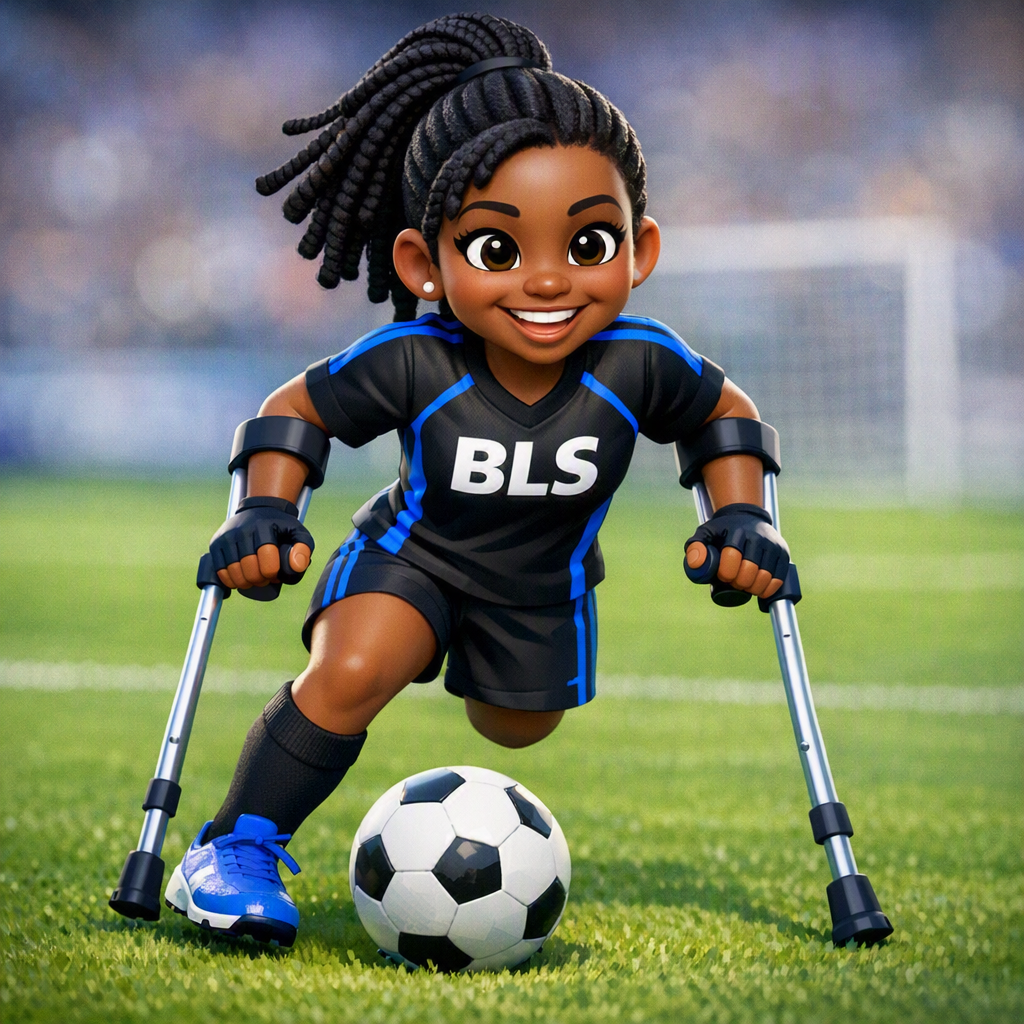
Amputee football
A brilliant example of how sport can be adapted without losing the excitement, competition and teamwork that make football so special. Whether someone has played football before or is trying a team sport for the first time, it offers an inclusive environment in which players can build confidence, improve fitness, develop new skills and, most importantly, enjoy being part of a team.
A brief history
Although amputees were pictured playing football on crutches in Europe as far back as the early 1900s, the modern form of the sport developed in the 1980s. Don Bennett, an amputee from Seattle, is credited with pioneering the modern game after discovering he could kick a ball while using crutches. The first organised international matches followed in 1984, and the sport subsequently expanded around the world.
How is it played?
Amputee football follows many of the principles of association football, with adaptations that make the game accessible to its players. Under international rules:
- Teams play 7-a-side, with six outfield players and one goalkeeper.
- Outfield players play on one leg and use forearm crutches, while goalkeepers have an upper-limb impairment and play standing on both legs.
- International 7v7 football is played on a smaller pitch than standard 11-a-side football, with current World Amputee Football Federation material specifying approximately 60m × 40m.
- The familiar aim remains the same: work together, create chances, defend your goal and score more goals than the opposition.
What can you expect?
Expect a fast, energetic and rewarding team sport that challenges balance, coordination, stamina and football skills. But you don't need to arrive as an experienced footballer. Participation can be about learning at your own pace, meeting people, building confidence and discovering what you can achieve.
Training gives players the opportunity to practise movement on crutches, passing, shooting, defending and teamwork before putting those skills into games. For those who develop a real passion for the sport, amputee football also has an established competitive pathway, including club, national and international competition.
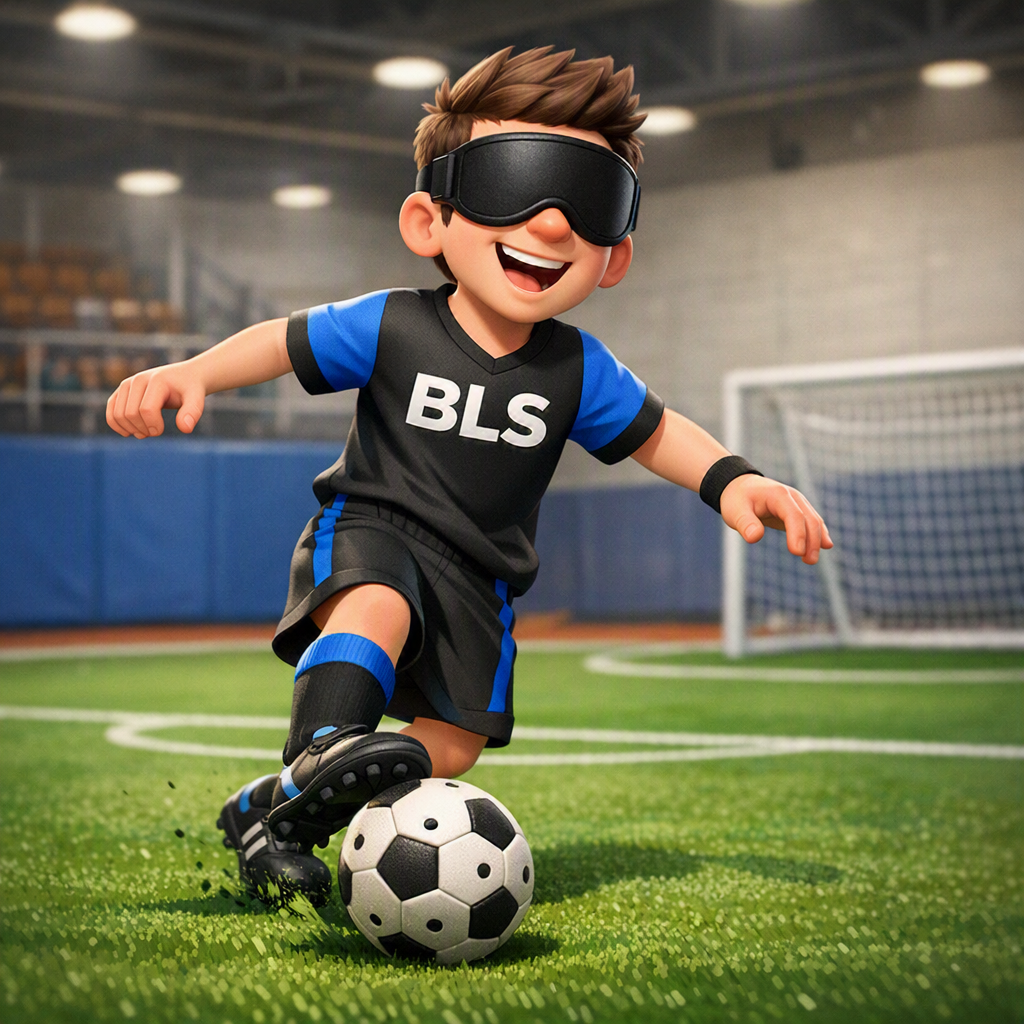
Blind football
An exciting, fast-moving and highly skilful version of football that gives blind and visually impaired people the opportunity to enjoy the game, build confidence and be part of a supportive team environment. It combines football skills with communication, spatial awareness and, above all, teamwork.
A brief history
Blind football developed from games played in schools for people with visual impairments. International Blind Sports Federation (IBSA) credits Spain as an early pioneer, with the sport being played there from the 1920s, while Brazil developed the game strongly from the 1960s onwards. IBSA formally took responsibility for the international game in 1996, helping establish internationally recognised rules. Blind football made its Paralympic debut at Athens in 2004.
How does blind football work?
Blind football is a five-a-side game. In competitive B1 blind football, the four outfield players wear eye patches and eyeshades, while the goalkeeper is sighted. The ball contains an audible device so players can locate and follow it by sound. Boards run along the sides of the pitch, helping keep the ball in play and providing players with an important reference point.
Communication is essential. Players call"voy" when challenging for the ball to let other players know they are approaching. Goalkeepers and guides also provide verbal information to help players with positioning and direction. During competitive play, spectators remain quiet while the ball is in play so players can hear the ball and instructions.
What can you expect?
If you're trying blind football for the first time, you don't need to arrive as an experienced footballer. Sessions can introduce you gradually to listening for and controlling the ball, moving confidently around the playing area, passing, shooting and communicating with teammates.
Expect an activity that challenges your fitness, coordination, concentration, communication and confidence, while giving you the chance to meet people and enjoy being part of a team.
Most importantly, blind football is about participation, ability and enjoyment. Whether you want to get active, learn a new sport, make friends or develop your skills towards competition, it's a fantastic opportunity to discover what you can achieve.
Listen. Communicate. Trust your teammates. Find the ball.
Enjoy the game!
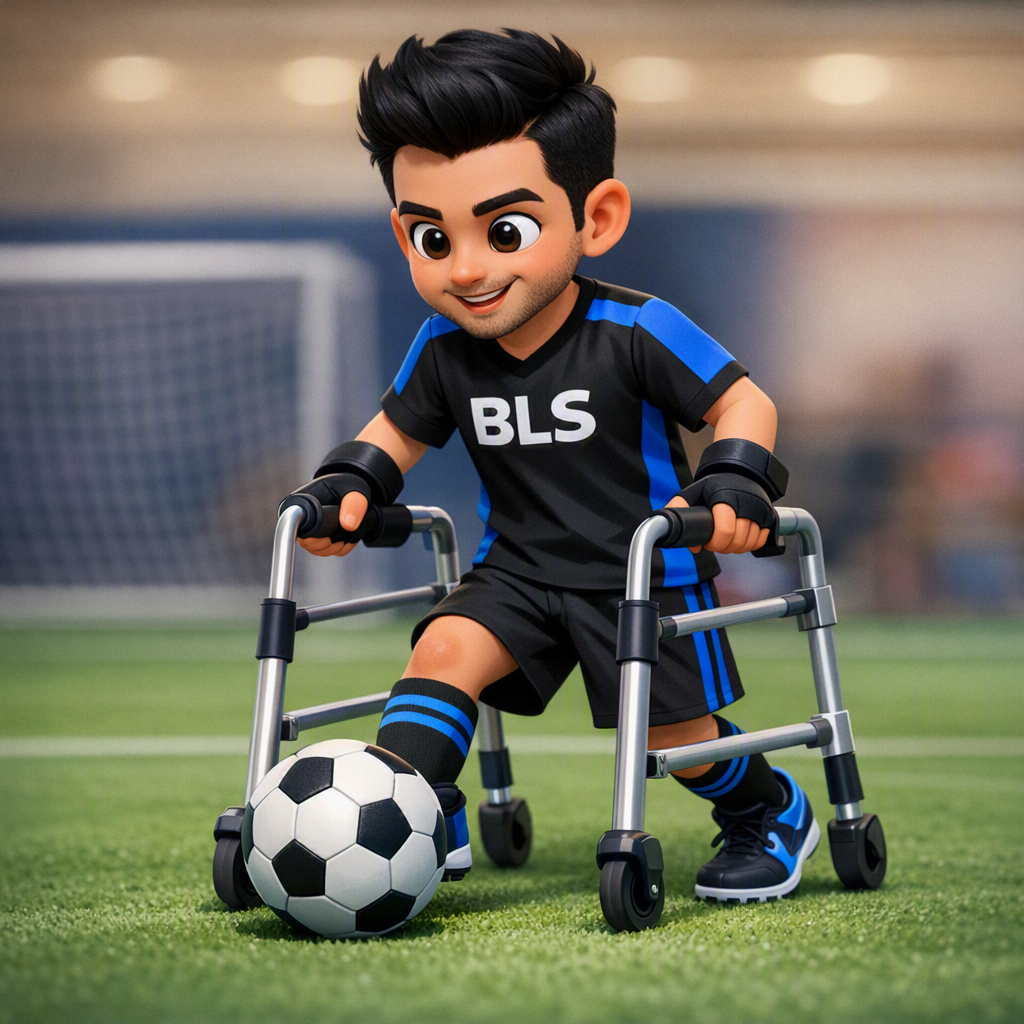
Cerebral Palsy (CP) Football
An exciting, fast-paced and inclusive form of football for ambulant players with cerebral palsy and certain other neurological conditions. It offers the chance to enjoy the world’s most popular game in an environment designed around players’ abilities, whether you are trying football for the first time or looking to develop your skills and compete. International Paralympic Committee – CP Football.
A brief history
CP Football has a proud international history. It made its international debut at the 1982 World Games for the Disabled and joined the Paralympic programme at the 1984 Paralympic Games in Stoke Mandeville and New York. It remained on the Paralympic programme through to Rio 2016. The International Federation of CP Football (IFCPF), formed in 2015 after the sport had spent 37 years under CPISRA, now governs and develops CP Football internationally.
How is it played?
CP Football keeps everything people love about football while making several important adaptations:
- Teams have up to seven players, including a goalkeeper.
- Matches are normally two 30-minute halves.
- The pitch is smaller than a standard 11-a-side football pitch.
- There is no offside rule, helping to create an open and attacking game.
- Players may have the option to roll the ball back into play rather than use a conventional throw-in.
- At competitive level, players are classified as FT1, FT2 or FT3 according to the impact of their impairment, with rules governing the combination of classifications on the pitch to support fair competition.
What can you expect?
Most importantly, you don't need to be an experienced footballer to give it a go. At a welcoming participation session, you can expect opportunities to build your confidence, practise passing, dribbling, shooting and movement, understand the adapted rules and experience playing as part of a team.
CP Football can offer much more than competition. It's an opportunity to get active, develop your football skills, meet new people and discover what you're capable of. For players who want to progress, the sport also provides competitive pathways from grassroots participation towards higher levels of the game.
Whether you've played football for years or have never kicked a ball before, come along, give CP Football a try and become part of the team.